AMVIP Vibration Forum 2025
AMVIP Vibration Forum at UCSI
LeQuadri Hotel of UCSI University
28th October 2025
Written by Mr. Lee Chong Wei
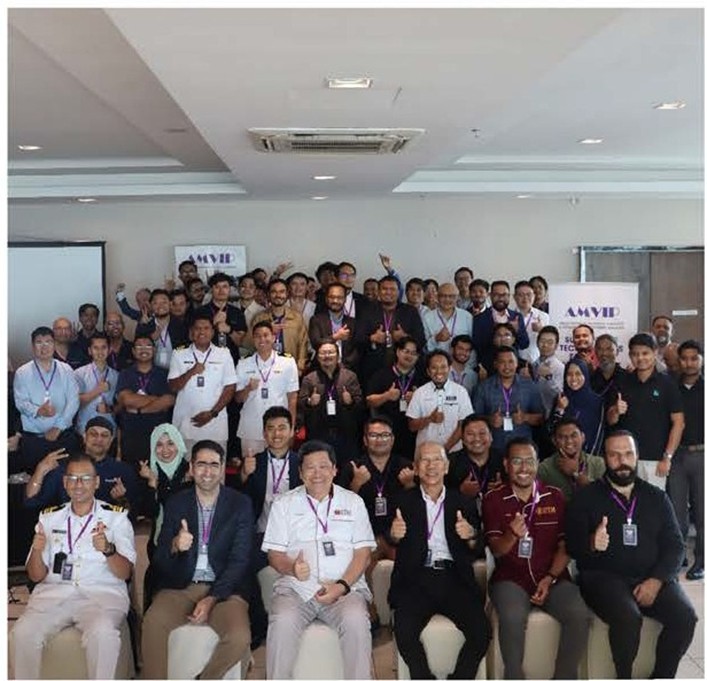
The one-day Forum was held on 28th October 2025 at the LeQuadri Hotel of UCSI University with over 70 delegates and 11 exhibitors on board. Delegates from diverse industries were offered a rare opportunity to explore challenges within their respective domains while exchanging technical insights on real-world issues, mitigation strategies, and emerging technologies.
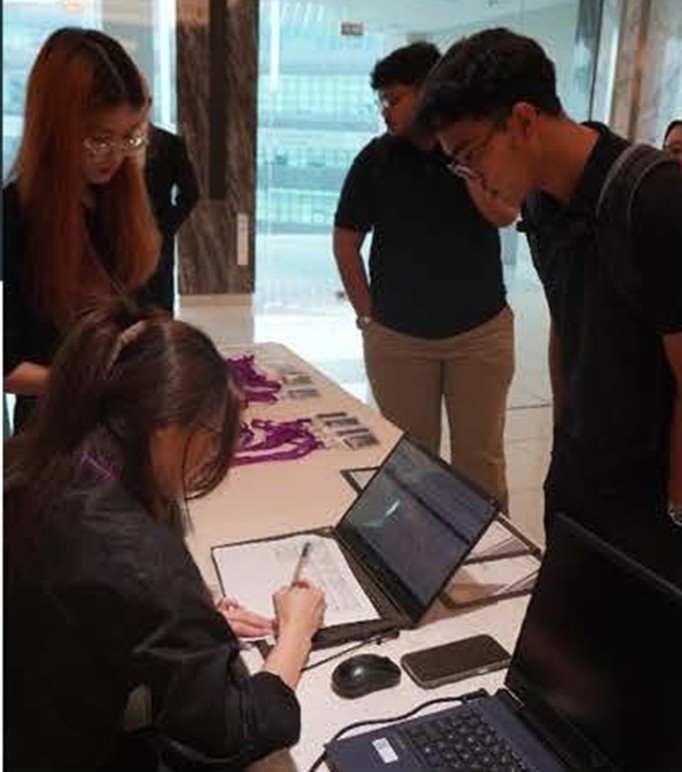
Across three major presentation blocks, distinguished speakers introduced state-of-the-art solutions tailored to asset owners and operators in sectors that include, but are not limited to, oil and gas, power generation, marine, ports, water utilities, rail, aerospace, infrastructure, and construction. The event created a dynamic learning environment where theory met practice, and where vibration issues were examined from both operational and research perspectives.
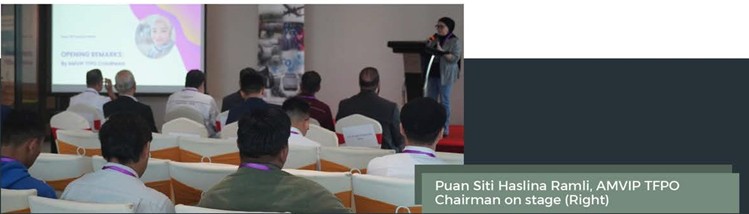
Following the opening remarks, the conference proceeded with Presentation Session l, where speakers shared insights into vibration issues encountered in operational environments and the corresponding management approaches implemented to ensure equipment reliability and safety. The session provided delegates with valuable perspectives drawn from field experience, emphasizing the importance of early detection, condition monitoring, and systematic vibration management.
The session begins with the speech delivered by Prof Salman Leong, Founding Director of UTM 1KG. His topic covered the Consequences of failures in rotating equipment. Which provided valuable insights into common failure mechanisms, the associated operational and safety risks, and the potential impact on asset reliability and lifecycle costs. Through practical examples and engineering perspectives, the session highlighted the importance of effective vibration analysis, early fault detection, and proactive maintenance strategies in preventing catastrophic equipment failures.
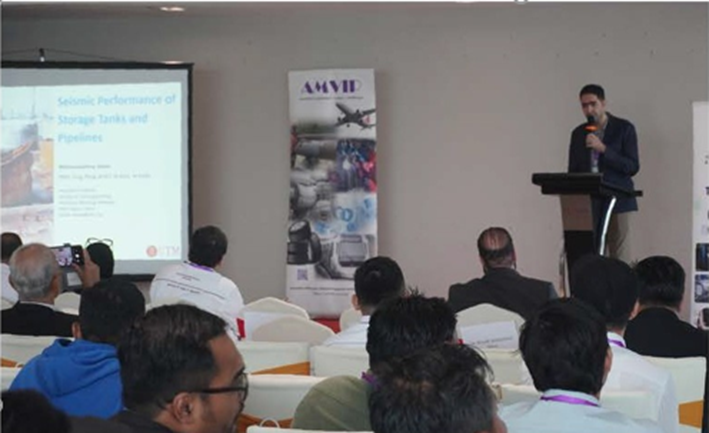
While Prof Salman Leong was delivering his insights on the consequences of failures in rotating equipment, his colleague, Assoc Prof Mohammadreza Vafaei, further enriched the session by generously sharing his expertise on The Seismic Response and Performance of Storage Tanks and Pipelines.
His presentation highlighted the dynamic behaviour of large scale industrial structures under seismic loading, addressing key design considerations, response mechanisms, and performance evaluation methods. The session provided delegates with a deeper understanding of mitigation strategies and engineering approaches required to enhance structural resilience and ensure the safety and reliability of critical infrastructure subjected to dynamic and vibration related effects.
The session further proceeded with a presentation by Lt Cdr Ir. Ts. Mohd Shafiq Sharhan bin Zainal from the Royal Malaysian Navy, who shared valuable insights on rotating machinery assessment utilising vibration analysis onboard RMN ships. Drawing from real operational experiences, he discussed the unique challenges faced in maritime environments, including space constraints, harsh operating conditions, and mission-critical reliability requirements. His presentation outlined existing practices and future directions in applying vibration analysis technologies to enhance machinery performance, operational readiness, and long term asset sustainability within naval operations.

The focus later transitioned to industry driven solutions, where representatives from Petronas, Quadrant2, Shinkawa, and Active Acoustic collectively showcased advancements in vibration monitoring and condition-based maintenance technologies.
The presentations covered practical applications of rotating machinery equipped with dampers, wireless machine health monitoring systems deployed in offshore environments through real-world case studies, and advanced vibration and acoustic measurement technologies designed to support continuous asset monitoring. These combined sessions highlighted how integrated sensing technologies, data analytics, and real-time monitoring platforms are increasingly shaping predictive maintenance strategies, enabling asset owners and operators to improve reliability, reduce downtime, and make informed engineering decisions across diverse industrial sectors.
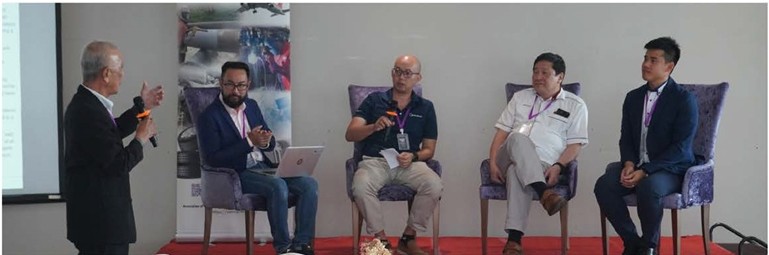
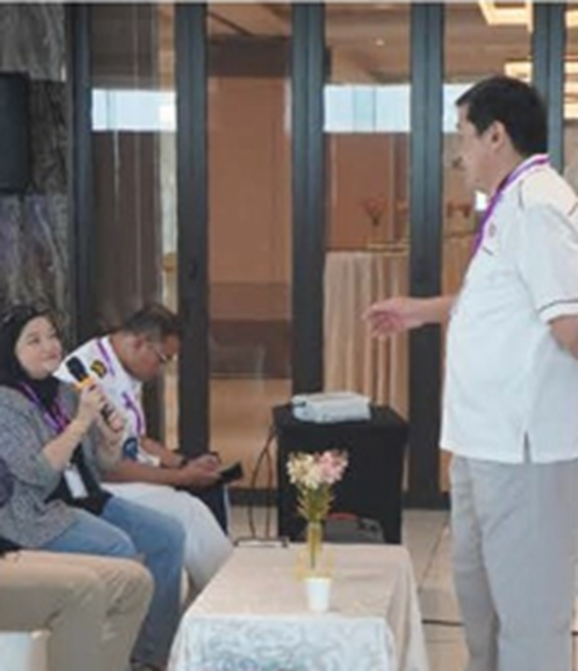
The conference was concluded with an engaging Concluding Remarks and Panel Review session, which focused on the way forward for the vibration and rotating machinery industry. This segment brought together distinguished experts from structural engineering, academia, and rotating machinery disciplines to reflect on the themes discussed throughout the day and to provide strategic perspectives on emerging challenges and future opportunities.
During the panel discussion, the panellists shared insights on the evolving role of vibration analysis in asset reliability management, emphasizing the increasing adoption of advanced monitoring technologies, data-driven maintenance strategies, and interdisciplinary collaboration. Key topics included the integration of structural and rotating machinery diagnostics, the importance of competency development and knowledge transfer, and the role of industry-academia partnerships in advancing vibration engineering practices.
The session concluded with an interactive Question and Answer segment, where delegates actively engaged with the panellists by raising technical queries and sharing operational experiences. The exchange of ideas underscored the collective commitment toward improving vibration management frameworks, enhancing system reliability, and strengthening the resilience of critical assets across industries. This final discussion effectively reinforced the conference's objectives and provided a forward-looking perspective on the continued development of vibration and rotating machinery technologies.
With this, the AMVIP Vibration Forum 2025 comes to the end.